hat makes Tanzania the ultimate place to have your safari experience? The largest and most peaceful of the East African countries, over a quarter of Tanzania’s land has been set aside for national parks and conservancies. Tanzania is home to some of Africa’s richest wildlife areas, with the entirety of the Big Five and the legendary Great Wildebeest Migration both found within the country’s northern circuit.
Names such as Kilimanjaro, Zanzibar, Serengeti, and Ngorongoro have already become synonymous with Africa, but these stunning locations are only the tip of the iceberg. Tanzania is home to more than a dozen parks and conservancies ranging from the massive Selous Game Reserve (the largest protected area in the world) to beautiful lakes such as Lake Victoria and Lake Tanganyika.
Beautiful Zanzibar off the country’s eastern coast is one of the most recognizable island paradises in the world, and its exotic history as a spice and slave port is matched only by the affordability of its many luxurious resorts.
Tanzania is also home to more than 120 different ethnic groups, with the Masai being perhaps the most famous tribal people in the world. With their iconic brightly colored clothing and their distinctive jumping dance, they’re known the world around for their adherence to tradition and their broad smiles. A visit to Tanzania can also include visits with the traditional Hadzabe Bushmen, who still lead a hunter-gatherer lifestyle much as they have for millennia.
With such variety in its offerings, it’s easy to see why Tanzania is the safari capital of the world. It’s perfectly equipped for all levels of tourism, while still retaining its African charm. Karibu Tanzania!
When to Visit Tanzania

There is no bad time to visit Tanzania. The best time to visit Tanzania really does depend on what you’re looking to take from your Tanzanian experience.
Rather than the four seasons that Europe, North America, and Australia experiences, Tanzania experiences alternating wet and dry seasons. The long dry season stretches from June through October, and during this time rain is rare even on the islands of Zanzibar. Temperatures vary based on altitude, but the weather is usually warm and sunny – making this the most popular time of year to visit Tanzania.
The short rainy season is in November and December, with bright and sunny ‘summer’ weather interspersed with the occasional rainy day. This is followed by the short dry season in January and February.
March to May is the country’s wet season. This period sees rivers swell and green return to the country. While this is the least popular time to visit Tanzania, it’s also the cheapest time to visit – perfect for the budget traveler.
For the beaches of Zanzibar the best time of year is from the end of June until the end of February, but weather is generally pleasant year round.
For the Great Wildebeest Migration, late October through until mid-August sees the vast herd of wildebeest, zebras, and antelope on the move. You can read ahead to our Great Migration section for a more detailed breakdown of the migration’s movements.
Big Five Safaris can be done year round. The only thing that changes in this regard is the parks we’ll take you to.
Climbing Kilimanjaro is possible year round, although January, February, and September are considered the best months for good climbing weather. January through mid-March offer the warmest and clearest weather, while June through August offer up clear but cold conditions. November and December’s short rainy season generally brings afternoon showers on the mountain, but visibility remains good. March through June are seen as the worst time of year due to heavy clouds obscuring climber’s views.
For game fishing, August through October is the best time of year for tuna, black marlin, blue marlin, and yellowfin. November through March is best for striped marlin, shortbill spearfish, broadbill, and sailfish.
For kite-surfing on Zanzibar, the wind and waves are best in January-February or July-July, with wind (but not waves) also being good from mid-December to March and from June to September.
For Events
The Kilimanjaro Marathon is held each March in Moshi. Recreational and professional joggers from around the world descend on the quiet mountain city to try their luck in the grueling race.
In February, the Sauti za Busara Festival in Stone Town, Zanzibar is a four day music festival celebrating African music. The largest African music festival in East Africa, Sauti za Busara attracts some of African music’s biggest acts as well as offering film screenings, seminars, and workshops.
The Zanzibar International Film Festival occurs each June, sees cutting edge film-makers from across Africa come together in a celebration of creativity not to be missed by film fanatics.
Safari Drivers and Guides
Over Shadows of Africa’s years in operation, we’ve carefully selected only the best guides, drivers, and auxiliary staff to ensure you get the absolute best service during your trip. All of Shadows of Africa’s staff have many years of experience in the industry.
All of our safari guides are fluent in both English and Swahili, and have received training at schools such as the College of African Wildlife to ensure they have the best working knowledge of African wildlife, plant-life, and birdlife. This makes them excellent at knowing where to find the animals you’re looking for, and they’ll make it their main goal to ensure you spot the animal you’re most excited to see. Over their years of safari experience, they’ve not only become experts in the parks and their residents, but have also become open, gregarious people you’ll soon come to consider as a friend. Local people with a passion for Africa, Shadows of Africa’s safari drivers are consummate professionals whose love for Africa is infectious.
Our mountain guides are experts at climbing the mountains of Tanzania and Kenya.. Speaking fluent English and Swahili, they’re the men charged with ensuring you make it safely to the top (and back).
For each climb we assemble a team of lead guides, assistant guides, cooks, porters, and other camp who will do their utmost to ensure you attain your goal of summiting the mountain. Possessed of an in-depth knowledge of the mountain and the hazards that climbing at altitude may pose, they’re responsible ensuring you feel safe on your climb, while also possessing an in-depth knowledge of the flora, fauna, and topography of the mountain. They know when to give encouragement, when to stop for rest, and how to spot the tell-tale signs of altitude sickness or hypothermia that might derail a climb. They know the challenges that the mountain poses, but they also know the feeling of accomplishment that climbers will feel when they reach the top. They’re one part guide, one part assistant, and one part personal trainer.
You can get to know your guide ahead of time by checking the site’s About Us page.
Safari Vehicles: Safe & Comfortable
Your safety and comfort are extremely important to us here at Shadows of Africa. Our fleet of safari vehicles has been specifically designed to handle the rigours of a true African safari while still affording you the maximum possible comfort on Africa’s dusty and often bumpy roads.
All of our safari vehicles are equipped with comfortable seats, 4×4 drive for handling rough terrain, a first aid kit, a HF radio, slide windows, a pop up roof, and plenty of storage space so you can bring all of your luggage along for the ride. Each safari vehicle is also equipped with multiple electrical outlets so you can charge your electronics while on the move.
Each safari vehicle is equipped to carry up to six people in comfort. Each seat is equipped with a seat belt, and the vehicle has the latest safety features to ensure your peace of mind.
Our safari vehicles go through regular maintenance checks that include oil checks, fluid checks, electronics checking, new tires (if necessary), and any additional maintenance necessitated by Africa’s often unforgiving roads.
Types of Accommodation in Tanzania

Shadows of Africa offers four distinct tiers of accommodation designed to suit all budgets and tastes. Ranging from traditional camping out under the stars all the way up to the ultra-luxurious, your safari can be designed to use only one tier of accommodation or to mix and match.
Shadows of Africa provides bookings for both traditional lodges and tented camps. Far from being a tent pitched under the stars, tented camps can be every bit as luxurious as traditional hotel accommodations. Most tented camps include private bathroom facilities, king sized beds, gourmet food, and WiFi access where possible. Far from roughing it, they’re every bit as luxurious as a hotel built with bricks and mortar.
Ultra Luxury
Featuring world renowned luxury brands, this tier of accommodations offers the very best of service and the very best of facilities. If you’re looking for something truly special in your accommodation, the Ultra Luxury tier of accommodation provides just that.
Ranging from traditional lodges to extravagant tented lodges under the stars, Ultra Luxury is for those seeking the absolute best Africa has to offer.
Luxury
For those who want the five star experience without paying five star prices, our Luxury tier offers lodges and tented camps that can boast magnificent views, spacious rooms, excellent service, and stunning wildlife viewing.
The equivalent to a four or five star hotel, our Luxury accommodation partners can be expected to offer such diverse services as spa facilities, nightly entertainment, world class cuisine, and more!
Our luxury lodges are as diverse as the landscapes of Tanzania, ranging from lodges built in the treetops or among the rocks of the Serengeti, to accommodations built along the rim of Ngorongoro Crater or at the heart of a fragrant coffee plantation.
Many different options, but all of which offer top level service at affordable prices.
Medium
Whether they’re located amid the hustle and bustle of Arusha or out in the bush, all of our Medium accommodations are chosen for their ability to foster an atmosphere of tranquility and remoteness.
Our medium lodges and tented camps can generally be expected to have WiFi internet, full service bars and restaurants, laundry service, money exchange, and gift shops. Individual establishments may vary.
Medium tier lodges are perfect for families or couples wanting their western creature comforts, but who are traveling on a budget. The equivalent to three star accommodations, all of our Medium lodges are carefully chosen for their service, facilities, and location.
Budget
For those traveling on a budget, our Budget tier offers a mixture of budget lodges and camping facilities that cater to both the budget conscious traveler or the adventurer.
Our budget lodges offer you western style bathroom facilities and the usual comforts you’d expect to find in a budget hotel back home, while all camping sites are equipped with western bathrooms and running water.
Even though you’re ‘roughing it’, you’ll be accompanied by one of our chefs who will prepare delicious meals for you, and your guide will set up your tent as you eat.
All campsites in and near Tanzania’s national parks and conservancies are patrolled 24 hours a day by armed rangers who are adept at keeping you safe without detracting from the beauty of falling asleep to the sounds of Africa’s wildlife.
Tarangire National Park

A short drive from Arusha, the Tarangire National Park offers a fantastic game driving experience all year round.
In the wet season the parks swamps and waterholes are home to cape buffalo and elephants, but really comes into its own when the dry season forces its animal population to move closer and closer to the Tarangire River.
Home to Tanzania’s largest population of elephants, Tarangire is the best place to see these gentle giants in their natural habitat from the adorable calves all the way up to the intimidating bulls. It is also an ideal place to snap photos of the baobab tree (the Tree of Life), as it grows in great numbers throughout the park. Tarangire is also the best place to see the fringed-eared oryx, greater kudu, and ashy starling in the wild.
Tarangire is a particularly enchanting prospect for bird-watchers, with a massive 550 species of bird calling the park home. These range from the sizable ostrich and Kori bustard all the way down to tiny weavers and warblers.
Predators such as the lion and leopard also call the park home, and lucky visitors might get to see these ferocious hunters in action as the dry season forces herbivores to move closer and closer to the Tarangire River.
Size: 2,850 square kilometres.
Location: 118km southwest of Arusha.
Best Time: Year round, but dry season (June to September) is the best.
To Do: Guided walking safaris, game drives, and cultural visits to nearby villages.
Known For: Elephants.
Optional Activities
- Night game drive
- Hot air balloon safari
- Walking safari with rangers
- Mountain biking
- Bird watching
- Cultural visits to villages in the area
Arusha National Park

Arusha National Park is a perfect trip for day safaris, as it is close to both Arusha and Moshi. With terrain that ranges from open savannah to tropical rainforest, the park is dominated by the shadow of Mt. Meru whose summit offers an unparalleled view of Mt. Kilimanjaro.
The park’s highlights can easily be seen in a single day, with a morning or afternoon game drive accompanied by either a walking safari or canoeing in Small Momella Lake where the hippos are at play.
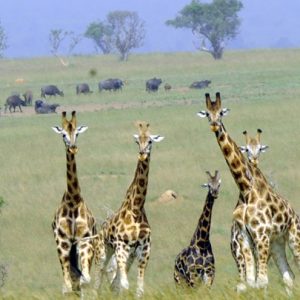
Arusha National Park is also home to Africa’s largest giraffe population, and its diverse landscapes are also home to antelopes, buffalo, monkeys (including the blue monkey and the black and white colobus monkey), hyenas, and even the ever elusive leopard.
Size: 542 square kilometres.
Location: North-east of Arusha.
Best Time: Year round. For climbing Mt. Meru, the best time is June-February. For views of Kilimanjaro, the best time is December-February.
To Do: Game drive, canoeing, walking safari, Mt. Meru climb, and picnic sites.
Known For: Perfect for a day trip from Arusha, and a great place to mix a traditional game drive with a walking or canoeing component.
Additional Activities
- Canoeing safari on Small Momella Lake
- Trekking to Mt. Meru
- Bird watching
- Forest walks
- Picnicking
Lake Manyara National Park

With a variety of landscapes, Lake Manyara National Park offers a compact safari experience that gives visitors the chance to see everything from the vibrant flamingoes to the fearsome lion.
Named for the seasonal alkaline lake at its heart, Lake Manyara National Park is a great place for canoeing in the wet season and traditional game drives year round. Described by Ernest Hemingway as “the loveliest I have seen in Africa”, Lake Manyara is an ideal starting or finishing point for the northern circuit.
In addition to its flamingo population, Lake Manyara is perhaps most famous for the tree climbing lions who call it home. Found nowhere else in Tanzania, these agile predators cut a striking figure as they lounge lazily in acacia trees.
Also calling the park home are Africa’s most iconic animals such as elephants, giraffes, zebra, wildebeest, and cape buffalo, as well as less well known but no less intriguing Kirk’s dik-dik and klipspringer.
Size: 330 square kilometres.
Location: Northern Tanzania. Roughly ninety minutes drive from Arusha.
Best Time: July to October for game or November to June for bird-watching.
To Do: Game drives, canoeing, cultural tours, mountain biking, abseiling, and forest walks.
Known For: Elephants and flamingoes.