Murchison Falls National Park in northwestern Uganda offers incredible wildlife, boat safaris, and game drives. Explore the stunning landscapes and see the Big Five. Plan your visit with this comprehensive guide, including accommodation options and travel tips.
Overview
Murchison Falls National Park, located in northwestern Uganda, is the largest national park in the country, covering an area of approximately 3,893 square kilometers. Established in 1952, the park is renowned for its stunning landscapes, diverse wildlife, and the dramatic Murchison Falls, where the Nile River plunges through a narrow gorge. This park is a significant part of Uganda’s natural heritage and offers a rich variety of ecosystems, including savannahs, woodlands, and wetlands.
Murchison Falls is the park’s centerpiece and Africa’s most powerful waterfall. The Nile River cleaves through Murchison Falls National Park (MFNP), creating magnificent waterfalls that tumble through a slim 7-meter fissure in the Rift Valley escarpment into the ominously named ‘devil’s cauldron,’ roaring with primal power. The Nile River then drops about 45 meters on the edge of the gorge, creating a thunderous roar and a mist that nourishes the surrounding vegetation. Visitors can view the falls from various vantage points, with Baker’s Viewpoint offering a panoramic perspective of this natural wonder. As it meanders through the park, the Victoria Nile nurtures an oasis vital for the thriving of incredible wild animals. Boat cruises along the Nile River are popular, allowing visitors to see wildlife up close and enjoy views of the falls from below.

Wildlife
Murchison Falls National Park is a biodiversity hotspot, home to a rich variety of wildlife that includes mammals, birds, and primates. The park’s diverse ecosystems—ranging from savannahs and wetlands to tropical forests—support over 76 species of mammals and more than 450 bird species, making it a premier destination for Uganda wildlife safaris.
Big Five
Murchison Falls National Park is notable for hosting four of the “Big Five” game animals (except the Rhinoceros found in the nearby Ziwa Rhino Sanctuary):
- Lions: These apex predators are often spotted during game drives in Murchison Falls National Park, particularly in the early morning or late afternoon when they are most active.
- Elephants: The park has a significant population of African elephants, frequently seen roaming the savannah and along the Nile River within Murchison Falls National Park.
- Cape Buffaloes: Large herds can be observed grazing in the open plains and near water sources throughout the park.
- Leopards: Although elusive and solitary, leopards can sometimes be spotted resting in trees or stalking prey during game drives in Murchison Falls National Park.
Other Mammals in Murchison Falls National Park
In addition to the Big Five, Murchison Falls National Park is home to a variety of other mammals:
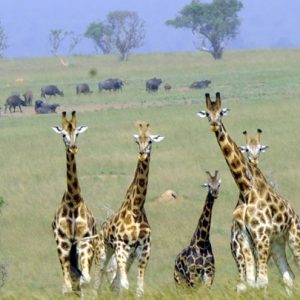
- Rothschild’s Giraffes: Murchison Falls National Park has one of the largest populations of Rothschild’s giraffes in Uganda, with over 400 individuals.
Antelope Species: Common species include Uganda kobs, waterbucks, Jackson’s hartebeests, and oribis.
Primates: The park features several primate species, including olive baboons, red-tailed monkeys, blue monkeys, and black-and-white colobus monkeys. Notably, there are around 800 chimpanzees in the Budongo and Kaniyo Pabidi forests within Murchison Falls National Park. - Aquatic Wildlife: The Nile River is teeming with Nile crocodiles frequently seen basking on riverbanks or swimming in the river. Large hippo pods can be observed during boat safaris on the Nile.
Birdlife
Murchison Falls National Park is a paradise for birdwatchers with over 450 recorded bird species. Notable birds include:
- Shoebill Stork: A rare sighting for bird enthusiasts.
- African Fish Eagle: Commonly seen near water bodies.
- Giant Kingfisher: Often spotted along the riverbanks.
Other species include various kingfishers, bee-eaters, and the vibrant Abyssinian Ground Hornbill.

Habitat Diversity in Murchison
Murchison Falls National Park is a remarkable example of habitat diversity, encompassing a range of ecosystems that support an extensive variety of flora and fauna. The park’s landscapes include savannahs, woodlands, wetlands, tropical forests, and open water, making it one of the most biodiverse areas in Uganda.
- Savannah Grasslands: The northern section of Murchison Falls National Park is characterized by vast savannah grasslands interspersed with acacia and Borassus palm trees. Dominant plant species include grasses and scattered trees, which provide shade and food for grazing animals. This habitat is crucial for many herbivores and predators. Commonly sighted species include elephants, Rothschild’s giraffes, Uganda kobs, and various antelope species. The open grasslands provide excellent visibility for game drives.
- Wooded Savannah: Adjacent to the grasslands, the wooded savannah features a mix of open areas and patches of denser vegetation. Acacia trees are prevalent, providing crucial food sources for giraffes and other herbivores. This habitat supports a variety of wildlife, including predators like lions and leopards often found here, taking advantage of the cover to stalk prey.
- Tropical Forests: In contrast to the open savannahs, the southern section of the park contains dense tropical forests such as Budongo and Rabongo. The forest is characterized by towering mahogany trees, sausage trees, and various species of ferns and shrubs that thrive in the moist environment. These forests are home to primates like chimpanzees, red-tailed monkeys, and black-and-white colobus monkeys. Birdwatchers can find numerous forest birds, some endemic to this region.
- Wetlands: The wetlands in Murchison Falls National Park are vital ecological zones that support diverse wildlife. Papyrus reeds dominate these wetlands, providing nesting sites for birds and shelter for aquatic life. These wetlands are also breeding grounds for many bird species, including the rare shoebill stork. Hippos and crocodiles are commonly found in these water bodies.
- The Nile River: The Victoria Nile runs through Murchison Falls National Park, creating a unique aquatic habitat. Water lilies and other aquatic plants flourish along the riverbanks, enhancing the beauty of this ecosystem. The river is teeming with life; hippos and Nile crocodiles are often seen lounging on the banks or swimming in the water.
- The Nile Delta: Where the Victoria Nile meets Lake Albert lies the Nile Delta, another area of rich biodiversity. It features a mix of marshes and reed beds supporting aquatic plants and migratory birds. This region is a haven for birdwatchers due to its variety of habitats that attract numerous bird species.
- Albertine Rift Valley: The park’s location within the Albertine Rift Valley adds another layer of complexity to its habitats. The varied topography allows for a mix of plant communities that thrive under different climatic conditions. This transition zone between savannahs and rainforests supports high biodiversity, including many endemic species.

Budongo Forest
Located in the southern part of Murchison Falls National Park, Budongo Forest is known for its rich biodiversity and is home to chimpanzees. It is a significant ecological zone within Murchison Falls National Park. Covering approximately 825 square kilometers, it is recognized as the largest natural tropical rainforest in East Africa. The forest is situated on the escarpment northeast of Lake Albert and is a critical catchment area for the lake, with several rivers flowing through it.
Budongo Forest is particularly famous for its chimpanzee population. Chimpanzee trekking in Budongo Forest is a popular activity, allowing visitors to observe these fascinating primates in their natural habitat. Other primate species in Budongo Forest include black-and-white colobus monkeys, vervet monkeys, and blue monkeys.
Activities in Budongo Forest
- Chimpanzee Trekking: This experience allows visitors to hike into the forest in search of habituated chimpanzees. Starting at 7:00 am, chimpanzee trekking in Budongo typically lasts about 2 to 4 hours, depending on where the chimpanzees are located. Once found, visitors can spend one hour observing them. Visitors are led by trained ranger guides who provide insights into chimpanzee behavior and the surrounding ecosystem. The groups are limited to six people per trek for conservation purposes. Trekking Permit cost $120 for foreign non-residents, $110 for foreign residents, and $80 for East African citizens.
- Chimpanzee Habituation Experience: Budongo Forest offers this immersive experience at a permit cost of $230 for foreign non-residents and allows participants to spend more time with the chimps as they become accustomed to human presence throughout the day. This full-day activity starts early in the morning and lasts from dawn to dusk, allowing participants to observe various aspects of chimpanzee behavior.
- Guided Nature Walks: In addition to chimpanzee-focused activities, Budongo Forest offers guided nature walks through its diverse ecosystems. These walks allow visitors to explore the flora and fauna of the forest. The cost is typically included in the trekking permit but may vary based on specific arrangements with Nkuringo Safaris or your tour operator.
- Bird Watching: Budongo Forest is renowned for its birdlife, making it a great destination for birdwatching enthusiasts. Guided birding tours can be arranged with Nkuringo Safaris, and the cost is often included with guided nature walks or trekking permits; specific pricing may vary based on tour operators.
- Educational Tours and Research Participation in Budongo Forest: Visitors interested in conservation can engage in educational tours that discuss ongoing research efforts and conservation strategies within Budongo Forest. The cost is usually part of guided tours; specific pricing may depend on arrangements made with research organizations or tour operators.

Activities in Murchison
Murchison Falls National Park offers a diverse range of activities beyond simply admiring the iconic waterfall. Here are some of the most popular ways to experience this incredible park:
Game Drives
Game drives are a highlight of any visit to Murchison Falls National Park, providing an exciting opportunity to see a wide variety of wildlife in their natural habitat. They are usually conducted primarily in the northern sector of the park, which features open savannah grasslands and woodlands that are conducive to wildlife viewing.
On game drives in Murchison Falls National Park, visitors have the chance to see four of the Big Five—lions, leopards, elephants, and buffaloes (note that rhinoceroses are not present in this park but can be viewed at the Ziwa Rhino Sanctuary). You might also encounter some of the 76 mammal species recorded in the park, including giraffes, hartebeests, waterbucks, jackals, hyenas, and various antelope species.
Key Game Drive Routes
- Buligi Track: This is the most popular route for game drives in Murchison Falls National Park. It stretches between the Victoria Nile and Albert Nile and offers sightings of elephants, buffaloes, lions, leopards, and various bird species.
- Victoria Track: Located near the Victoria Nile, this track allows visitors to see animals as they gather at the riverbanks for drinking and grazing.
- Albert Track: This route runs along the Albertine Delta and is known for its diverse birdlife and large herds of buffaloes.
Types of Game Drives in Murchison Falls National Park
- Morning Game Drives: Typically start around 6:30 AM. This time is ideal for spotting early risers and nocturnal animals returning to their hiding places.
- Evening Game Drives: Usually commence around 4:00 PM, allowing visitors to watch the wildlife as they become more active in the cooler temperatures of the evening.
- Full-Day Game Drives: These allow for extensive exploration of different areas within the park, increasing the chances of spotting various animal species.
Night Game Drives in Murchison Falls National Park: Conducted after dinner, starting around 8:00 PM. These drives utilize spotlight torches to spot nocturnal wildlife such as hyenas, leopards, and bush babies.
The best time for game drives in Murchison Falls National Park is during the dry seasons, June to September and December to February. During these months, animals congregate around water sources due to reduced vegetation cover, making them easier to spot. While game drives can occur year-round, visibility may be reduced during heavy rains when grass grows taller.

Boat Safaris
Boat safaris are among the most popular and rewarding activities in Murchison Falls National Park, offering a unique perspective of the park’s stunning landscapes and incredible wildlife. Boat safaris allow visitors to explore the park from the water, offering a different vantage point compared to traditional land-based game drives.
Boat Safari Routes
The primary routes for boat safaris in Murchison Falls National Park include:
- Nile Boat Cruise to Murchison Falls: This cruise takes visitors to the base of Murchison Falls, where they can witness the powerful waterfall up close.
Nile Delta Cruise: A more tranquil journey through the papyrus-dominated delta area where the Nile flows into Lake Albert. This is a great opportunity to spot the prehistoric shoebill stork and other popular swamp animals and birds.
While on a boat safari in Murchison Falls National Park, visitors can expect to see a variety of wildlife. Hippos and Nile crocodiles are commonly spotted along the riverbanks. Elephants, buffaloes, and various antelope species often come to drink at the water’s edge.
The highlight of the cruise is reaching the base of Murchison Falls, where visitors can hear the thundering water as it crashes through a narrow gorge. The lush vegetation along the banks of the Nile adds to the scenic beauty, creating a picturesque backdrop for wildlife viewing.
Types of Boat Safaris in Murchison
- Morning Boat Cruise: Departs at 9:00 AM and takes about 2-3 hours. This is ideal for spotting wildlife as they are most active in the morning.
- Afternoon Boat Cruise: Departs at 2:00 PM and is similar to morning cruises. You get a chance to see animals returning to water sources as temperatures cool down.
- Nile Delta Boat Cruise: A leisurely exploration of the delta area for up to 5 hours, providing opportunities for birdwatching and spotting various wildlife.
- Sundowner Boat Cruise: A relaxing cruise during sunset, offering stunning views as the sun sets over the Nile.
Private or Uganda Wildlife Authority (UWA) Boat Cruises
UWA manages the official boat cruises in Murchison Falls National Park, ensuring safety and conservation practices are upheld. It runs two cruises—9:00 AM and 2:00 PM. Each cruise lasts about 2-3 hours for the Nile Boat Cruise ($30 per person), while the Nile Delta Cruise can take up to 5 hours ($40 per person).
Private boat cruises offer a more personalized experience and can be tailored to individual preferences. The cruises are similar to UWA offerings but can include special requests such as sunset cruises or exclusive birdwatching trips.
Private boat cruises have flexible timing based on client preferences, allowing for morning, afternoon, or evening departures. Prices can vary significantly based on the size of the boat and duration. Expect costs to start at approximately $100-$150 per person for a private experience, which may include refreshments and a more intimate setting.
Murchison Falls National Park Tour Packages
Ready to experience the raw beauty and untamed wildlife of Murchison Falls National Park? Nkuringo Safaris specializes in crafting bespoke Uganda adventures, allowing you to hand-pick your ideal experiences, from thrilling game drives to tranquil boat safaris. Whether you dream of encountering the Big Five, tracking chimpanzees in Budongo Forest, or simply soaking in the splendor of the Nile River, we’ll handle all the logistics, ensuring a seamless and unforgettable journey. Contact Inspire African Safaris and let’s start planning your personalized Murchison Falls adventure!

Uganda Wildlife Safari Adventure For Couples
10 Days
detailed safari

From Murchison to Kibale and down to Bwindi
16 Days
detailed safari

Explore The Best Birding Spots in Uganda on This Safari.
20 Days
detailed safari

Sport Fishing
Sport fishing in Murchison Falls National Park is a thrilling activity that attracts anglers from around the world. The Victoria Nile, which flows through the park, offers excellent fishing opportunities, particularly for the legendary Nile perch and the ferocious tigerfish.
Prime Fishing Spots in Murchison Falls National Park
- Devil’s Cauldron: Located at the base of Murchison Falls, this area is renowned for its large Nile perch.
- Near Paraa Safari Lodge: This is a popular spot for both bank fishing and boat fishing in Murchison Falls National Park.
- Below Karuma Falls: Another excellent location for catching various fish species in Murchison Falls National Park.
You can enjoy sport fishing in Murchison Falls National Park year-round. However, the best time is during the dry season (June to September and December to February) due to lower water levels and clearer conditions. Fish are more active during these months. Early morning and late afternoon are particularly productive times for catching fish as they tend to feed more actively.
Sport Fishing Permits and Fees
The Uganda Wildlife Authority (UWA) requires permits for sport fishing in Murchison Falls National Park. The fees are:
- $50 per person for one day of fishing.
- $150 per person for four days of fishing.
These fees are for fishing permits only and must be paid in addition to park entrance fees, which vary based on nationality (foreign non-residents vs. residents).

Best Times to Visit
Murchison Falls National Park is open year-round, but specific times offer better experiences for wildlife viewing and overall enjoyment. Here’s a detailed overview of the best times to visit the park, including the advantages of each season:
Dry Season (December to February and June to September)
The dry season is generally considered the best time to visit Murchison Falls National Park for wildlife viewing. It is characterized by warm temperatures, clear skies, and minimal rainfall. However, January and February can be particularly hot, so visitors should prepare for high temperatures.
Advantages
- Excellent Wildlife Viewing: Animals congregate around water sources, making them easier to spot as vegetation thins out. This is particularly advantageous for game drives and boat safaris.
- Favorable Weather: The weather is typically warm and dry, with daytime temperatures ranging from 25°C to 32°C (77°F to 90°F). Nights are cooler, dropping to around 18°C (64°F).
- Reduced Mosquito Activity: There are fewer mosquitoes during this time, reducing the risk of malaria.
- Prime Birdwatching Opportunities: Migratory birds are present during the dry season, enhancing the park’s avian diversity.
Wet Season (March to November)
The wet season in Murchison Falls National Park is characterized by intermittent rain showers and lush green landscapes. Although it includes some heavy rainfall, Murchison Falls typically receives less rain than other parts of Uganda. However, wildlife spotting can be more challenging due to denser vegetation, and some roads may become impassable after heavy rains.
Advantages:
- Lush Scenery: The park transforms into a verdant paradise, providing beautiful landscapes for photography and a different ambiance.
- Fewer Tourists: March, April, May, October, and November are considered the low season. This means fewer crowds and a more exclusive experience.
- Excellent Birdwatching: This period is ideal for birdwatchers, as many resident species display vibrant breeding plumage, and migratory birds are also present.