verything you need to know about one of the most extraordinary animal encounters in the world
Hidden deep in the misty mountains of Rwanda, Uganda and the Congo, only around one thousand mountain gorillas remain.
They are the world’s most endangered ape, threatened by humans and habitat loss, yet the gorillas of Rwanda are one of the world’s greatest conservation success stories.
They are the only primate species on Earth with increasing numbers and Rwanda has built a thriving industry around the gorilla encounters.
The gorillas are fiercely protected by rangers and police, and 10% of the revenue from gorilla trekking permits are used for conservation and community development, so your Rwanda gorilla trek will directly contribute to the protection of these beautiful creatures and the surrounding communities.
Witnessing the gorillas in their natural habitat is an incredible privilege and one of the most extraordinary wildlife encounters you’ll ever experience.
It’s no easy feat, with hours of pushing your way through dense, slippery jungle, but once you’re there – watching baby gorillas playing or a silverback sizing you up – you may never be quite the same.
Exhilarating and eye-opening, many people find themselves deeply moved by a rare encounter with a gorilla in the wild.
Where to find mountain gorillas in Rwanda
Just over half of the world’s 1,000 remaining mountain gorillas live in the Virunga Mountains of central Africa – a range of volcanoes extending about 50 miles along the borders of Rwanda, Uganda and the Republic of the Congo.
The best place to see these rare creatures is in Parc National des Volcans (Volcanoes National Park) in northwest Rwanda.
How to get to Volcanoes National Park
The easiest way to enter Rwanda is by flying into the capital city of Kigali. On arrival at Kigali International Airport, you’ll receive a 30 day single entry tourist visa.
As of 1st January 2018, nationals of all countries can get this visa for a fee of US$30, however be sure to check Rwanda immigration for the most up-to-date information.
Once you have cleared immigration at the airport, you will be met by a Wayfairer representative and transferred to your hotel.
We recommend spending a couple of days in Kigali at the start or end of your trip, or you can make your way directly to Volcanoes National Park. The park is located about 105 kilometres from Kigali and is a two hour drive from the airport.
Wayfairer Top Tip – You can easily combine Rwanda with a Big Five safari holiday in Kenya or Tanzania, or with a beach holiday in Zanzibar. Our Gorillas, Masai Mara & Zanzibar holiday is a great example itinerary, and it can be fully customised to suit your needs.
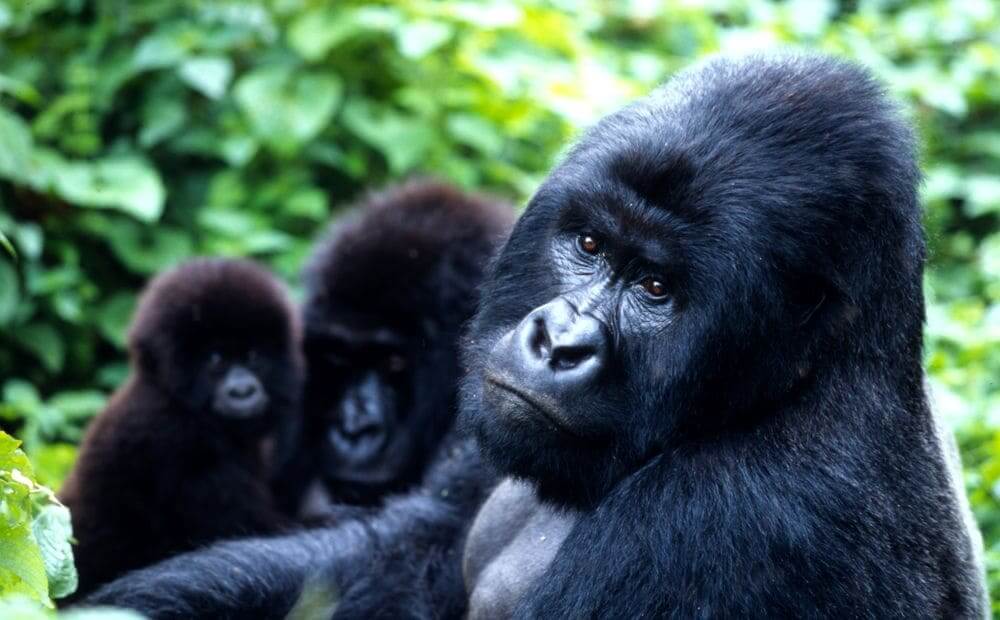
Parc National des Volcans (Volcanoes National Park)
Conservationist Dian Fossey spent 20 years studying mountain gorillas in Volcanoes National Park, and it’s thanks to her work that poaching was curtailed in time to save these majestic animals. The park features in the film ‘Gorillas in the Mist’ (1988) which chronicles Dian’s work.
There are currently 12 habituated mountain gorilla families in Volcanoes National Park. Trekking groups are allocated a specific gorilla family to track and the number of people in each group is strictly limited to 8, which means that only 96 permits are available per day (see below for more information on permits).
Best time to visit Rwanda
You can track gorillas in Rwanda throughout the year. The best time tends to be during the dry period from June to September as the jungle is less muddy and the paths are less slippery, although you should bear in mind that it can rain any time of year.
The wettest months are April and May, bringing tricky muddy trails, however you can still track gorillas at this time. The gorillas often climb higher up the mountain during the dry season and descend during the rains.
This is also an excellent time for tracking chimpanzees as fruit ripens and this brings the chimps down to the lower reaches of the forest canopy.
The rainy seasons (around March to May and October to November) can also provide the best conditions for photography in gorilla country. After a rainy shower, the air is clear of any dust, providing the perfect atmosphere for gorilla photography.
Read our month-by-month guide of Rwanda’s weather to help decide when to go.
What to expect on a gorilla trek in Rwanda
Your gorilla trekking adventure starts early – you’ll need to arrive at the Kinigi park headquarters in Volcanoes National Park at 7:00am for a briefing from one of the park rangers.
You’ll begin your search for a gorilla family around 8:30am, and are required to return to the campground by 7:00pm at the latest (although your trek may take less time).
One of the key elements in determining which gorilla family you’ll trek to see is the duration and difficulty of the trek you wish to undertake. Your trek could last anywhere from two to nine hours, depending on the exact location of the specific gorilla family which you’re tracking.
You don’t have to be super-fit, however it does help if you have a reasonable level of fitness, if only to enhance your overall enjoyment of the experience.
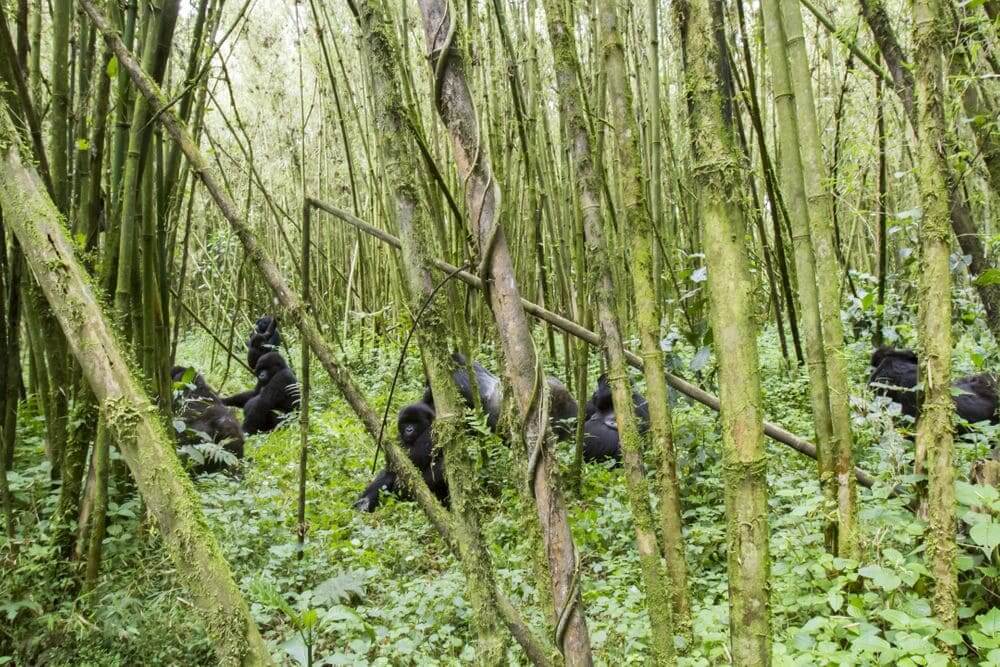
Your professional guide and tracker will lead you through the forest trails in search of your gorilla family. The conditions in the forest can be slippery and muddy – even in the dry season – and it can also be very humid under the forest canopy.
The trek is fairly challenging and you may find it tough as you pass through the dense undergrowth. The high altitude and the steep, slippery trails can make the trek exhausting, but it’s definitely worth the effort to spend time with mountain gorillas in the wild.
When you finally find these gentle giants you’ll have the opportunity to spend up to one hour in their company, before returning to your lodge to reflect on your moving and magical encounter with the wild mountain gorillas of Rwanda.