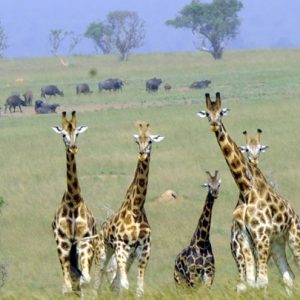
Nairobi National Park, established in 1946, is Kenya’s oldest national park and the only one located within a capital city, just 7 km (4.3 miles) south of Nairobi’s central business district. Covering 117 km² (45 square miles), it sits at an altitude of 1,533–1,760 meters (5,030–5,774 feet) and is a unique blend of wilderness and urban proximity, with Nairobi’s skyline and air traffic visible in the background. Managed by the Kenya Wildlife Service (KWS), it’s a key conservation area, particularly for the endangered black rhinoceros, earning the nickname “Kifaru Ark” (Kifaru means rhinoceros in Swahili).
Key Features and Wildlife
• Habitats: The park features diverse ecosystems, including open grassy plains, savanna, acacia bushland, riverine woodlands, rocky gorges, dry upland forests, and man-made dams. The southern boundary along the Mbagathi River remains open, connecting to the Kitengela Game Conservation Area, allowing seasonal wildlife migration.
• Wildlife: Home to over 100 mammal species, including four of the “Big Five” (lion, leopard, buffalo, and black rhino; no elephants due to the park’s size). Other animals include cheetahs, hyenas, giraffes, zebras, wildebeests, hippos, crocodiles, impalas, gazelles, elands, and hartebeests. The park is a major rhino sanctuary, hosting around 100 black rhinos and a smaller number of southern white rhinos.
• Birdlife: Over 400 bird species, including residents like the secretary bird, martial eagle, and grey crowned crane, and seasonal European migrants (March–May), such as the lesser kestrel and corncrake.
• Migration: The park hosts a wildebeest and zebra migration, particularly visible from July to August, though populations have declined significantly (e.g., wildebeest numbers dropped from over 30,000 to a few hundred due to urban expansion).
Attractions and Activities
• David Sheldrick Wildlife Trust: Located near the main entrance, this sanctuary (est. 1977) rears orphaned elephants and rhinos for release into secure sanctuaries. Visiting hours are typically 11 AM–12 PM for public feedings.
• Nairobi Animal Orphanage: Established in 1963 within the park, it rehabilitates injured or abandoned animals, including lions, cheetahs, and various birds. Open 9 AM–5 PM.
• Nairobi Safari Walk: A raised boardwalk near the main gate offering educational insights into Kenya’s ecosystems.
• Ivory Burning Site Monument: Commemorates the 1989 burning of 12 tons of ivory by President Daniel arap Moi, symbolizing Kenya’s anti-poaching stance.
• Picnic and Event Sites: Include Impala Observation Point, Kingfisher, Mokoyiet, Mbuni, and Hippo Pool, ideal for picnics, bush dinners, weddings, and team-building.
• Activities: Game drives (4–6 hours, best early morning), guided walking trails along the Athi River, birdwatching, and eco-volunteer programs. Self-driving is possible with a park map; 4×4 vehicles are recommended in the rainy season (March–May, October–November).
Access and Logistics
• Location and Access: About 10 km from Nairobi’s CBD via Lang’ata Road, accessible from Nyayo National Stadium or a 20-minute drive from Jomo Kenyatta International Airport (6.2 miles). Wilson Airport serves domestic safari connections. The park has five gates: Main Gate (KWS Headquarters), Lang’ata, Maasai, East, and Cheetah (two are for KWS use only).
• Operating Hours: Open daily 6 AM–6 PM. Animal Orphanage and Safari Walk: 9 AM–5 PM.
• Transportation: Visitors can self-drive (sedans are fine in dry seasons), hire a private vehicle, or use a KWS shuttle bus (Sundays, 2 PM, book by 1:30 PM at the main gate). A weekend shuttle runs from Nairobi’s CBD (10 AM–12 PM).
• Entry Fees (2024–2025):
• High Season: International adults: $100/day, children/students: $35/day. African citizens: $50/adult, $20/child. East African Community (EAC) residents: Ksh 2,000/adult, Ksh 500/child.
• Low Season: International adults: $43/day, children/students: $20/day. EAC residents: Ksh 430/adult, Ksh 215/child.
• Students: Discounted rates (up to age 23) for educational groups with KWS authorization. Children under 3 enter free.
• Payments are cashless (Mpesa, Visa, MasterCard, or KWS bank deposits) via the eCitizen platform (kwspay.ecitizen.go.ke). Proof of residency (ID/passport) is required for discounted rates.
• Best Time to Visit: Dry seasons (June–September, January–February) for optimal game viewing and clear city skyline views. Rainy seasons (March–May, October–November) may limit drives due to high grass and muddy roads.
Accommodation
• Inside the Park: Nairobi Tented Camp is the only lodging within the park, offering a luxury experience.
• Nearby: Options outside the park include Emakoko Lodge, Eka Hotel, Panari Hotel, African Heritage House, Acacia Camp Swara Plains, and Ole Sereni Hotel, catering to various budgets.
Conservation and Challenges
• Conservation Efforts: The park is a global leader in black rhino conservation, supplying rhinos to other Kenyan parks. The David Sheldrick Trust and Nairobi Animal Orphanage support rehabilitation. Friends of Nairobi National Park (FoNNaP), founded in 1995, promotes biodiversity protection and public awareness.
• Challenges: Urban expansion, fencing, and poaching threaten wildlife, with wildebeest populations dropping over 90% in recent decades. The park’s migratory routes are at risk of being cut off by development in the Athi-Kapiti ecosystem.
Visitor Tips
• Early Visits: Morning game drives (starting 6 AM) offer the best wildlife sightings and cooler temperatures.
• Essentials: Bring binoculars, sunscreen, water, and a hat. A 4×4 vehicle is advised for rainy seasons.
• Guided Tours: Recommended for first-time visitors; rangers track larger animals’ movements.
Nairobi National Park offers a surreal safari experience, blending raw African wilderness with an urban backdrop, making it ideal for short visits or as a starting point for broader Kenyan safaris. For more details or bookings, contact tour operators like Inspire African Safaris.